Planning Your Gutter Installation: Key Considerations for Atlanta Homes
Water management is one of those home systems that only gets attention when something goes wrong. A clogged gutter, a sagging section, or water spilling over the edge during a heavy rain quickly reminds you how important a well-designed system really is. For homeowners in Atlanta, where afternoon thunderstorms can dump rain fast, getting the gutter setup right matters a lot.
This article walks through the main decisions you face when planning a new gutter installation or a full replacement. The goal is to help you talk through the options with contractors, ask the right questions, and understand what goes into a system that works reliably for years.
Start with a Plan, Not Just a Product
Many people begin gutter shopping by picking a material or a color. That is fine, but the most important work happens before you choose anything. A good installation plan starts with looking at how water moves off your roof and where it needs to go once it leaves the gutters.
Take a walk around your house during a rainstorm. Watch where water runs off the roofline. Notice if it pools in certain spots or if overflow is already happening. These observations tell you a lot about what the new system needs to handle. Downspout placement, gutter pitch, and the number of hangers all depend on the specific way your roof sheds water.
Working with experienced roof gutter installers atlanta means you get someone who has seen the local conditions before. They know how to adapt standard designs to the older homes in intown neighborhoods and the larger roofs common in the suburbs.

Material Choices That Last
Atlanta's weather is humid and hot in the summer, with freeze-thaw cycles in the winter. That combination is hard on gutter materials. Aluminum gutters are a common choice because they resist rust and hold paint well. They are lighter than steel and easier to work with on complex roof lines. Seamless gutters, which are formed from a single piece of material on site, reduce the number of joints where leaks can start.
Vinyl gutters are cheaper but tend to sag and crack in direct sun over time. Steel gutters are strong but can rust if the protective coating gets scratched. Copper looks beautiful and lasts a very long time, but the cost is much higher and the installation requires special skills. Your budget, the look you want, and how long you plan to stay in the home all factor into the choice.
Getting the Pitch Right
Gutters need a slight slope so water flows toward the downspouts. That slope is called the pitch. Too little pitch and water sits in the gutter, leading to rust, sagging, and mosquito problems. Too much pitch and the gutter looks uneven and can pull away from the fascia board over time.
A standard pitch is about a quarter-inch of drop for every ten feet of gutter. Professional installers measure and adjust this carefully. They also check that the fascia board underneath is sound. If that board is rotten or not securely attached, the gutter system will fail no matter how good the materials are.
Downspout Placement and Water Routing
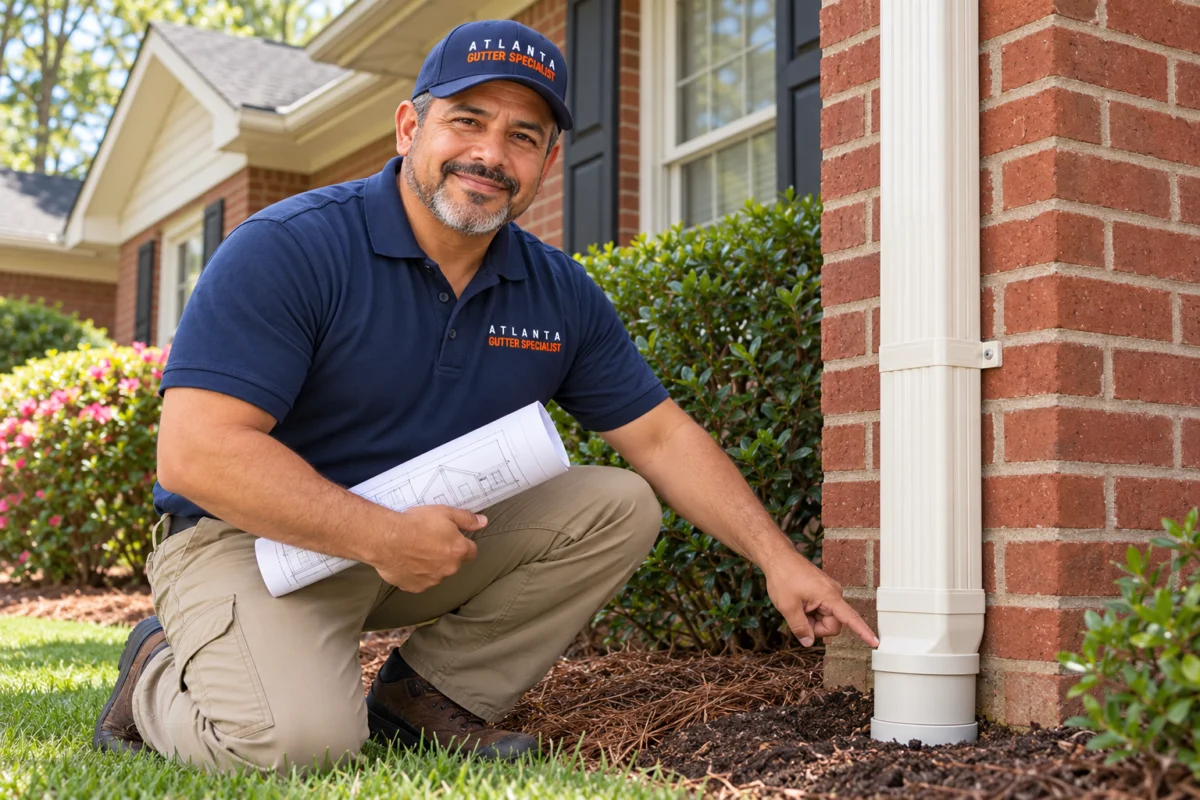
Where the water comes down matters just as much as where it goes. Downspouts should be placed at natural low points in the roofline, not just where they look tidy from the street. A good installer thinks about how water flows off valleys, dormers, and gable ends. They also consider what happens to the water after it leaves the downspout.
Atlanta homes often have basements or crawl spaces that need to stay dry. That means downspouts need to discharge well away from the foundation. Extensions, splash blocks, or underground drains can carry the water to a safe spot. If you have a rain barrel or a French drain system, the downspout placement has to work with those features too.
Leaf guards are another consideration. Atlanta has plenty of trees, and oak leaves, pine needles, and sweetgum balls can clog a gutter quickly. Leaf guards come in several styles: foam inserts, mesh screens, or solid covers with a slit for water. Each has trade-offs between keeping debris out and letting water flow freely. Talk with your installer about which style works best for the trees on your property.
When Replacement Makes More Sense Than Repair
Sometimes a gutter section just needs a new hanger or a patch. But if you have multiple leaks, sagging sections, or gutters that are more than twenty years old, a full gutter replacement is often the smarter move. Patching an old system can lead to one repair after another, and the hidden damage behind the gutters can get worse over time.
Signs that replacement is due include peeling paint on the gutters, rust spots, standing water after a rain, and water stains on the fascia board. If you see granules from asphalt shingles in the downspout, that means your roof is shedding material, and the gutters are catching debris they were not designed for. A replacement gives you a chance to upgrade the whole system at once, with better materials and a fresh design.
Discussing your situation with roof gutter installers atlanta gives you a clearer picture of whether a repair or a full replacement fits your needs. They can inspect the existing system and point out issues you might not have noticed.
Working with Installers: What to Expect
A good installation starts with a thorough inspection and a detailed quote. The installer should measure the roofline, check the fascia condition, note the number and location of downspouts, and ask about any past problems. They should also explain why they recommend certain materials and placement. If a quote just lists a price and a material without any explanation, that is a red flag.
The installation itself usually takes a day or two for an average house. The crew removes the old gutters, preps the fascia, and installs the new system. They should test the pitch and check for leaks before they wrap up. A reputable installer stands behind their work and will come back if something goes wrong after a heavy rain.

Keeping the System Working
Even the best gutter system needs some care. Cleaning out leaves and debris twice a year, usually in late spring and late fall, prevents clogs and overflow. If you have leaf guards, you still need to check them periodically to make sure they are not blocked. A quick visual check after a storm can catch small problems before they turn into big ones.
Look for sagging sections, loose hangers, and downspouts that have pulled away from the wall. Catching these things early saves you from water damage to your siding, foundation, or landscaping. A gutter system that is planned well, installed right, and maintained regularly will protect your home for decades.
Getting the details right from the start makes all the difference. The time you spend planning and choosing the right approach pays off every time it rains.